






- List of Engineering Universities in Germany
- Top-ranked Universities for Engineering
- Requirements for an Engineering Degree
- Cost of Attendance
- Application Process
- German Engineering Universities in our StudyFinder
 Germany's largest study program database
 Browse study programs
24,063 courses available


What to study?
Where to study?
Germany is a haven for engineering students. With some of the best engineering universities in Europe, it is one of the most sought after countries to study engineering in Europe. In fact, Germany is home to internationally top-ranked universities, ranked 3rd in the world (behind the US and the UK) in top universities. Moreover, there is a great variety of engineering degrees to choose from.
This article will give you an overview of some of the best engineering universities in Germany, tell you what you need to apply, and illustrate the step-by-step process. It also provides links to additional resources to help you prepare the necessary documents.
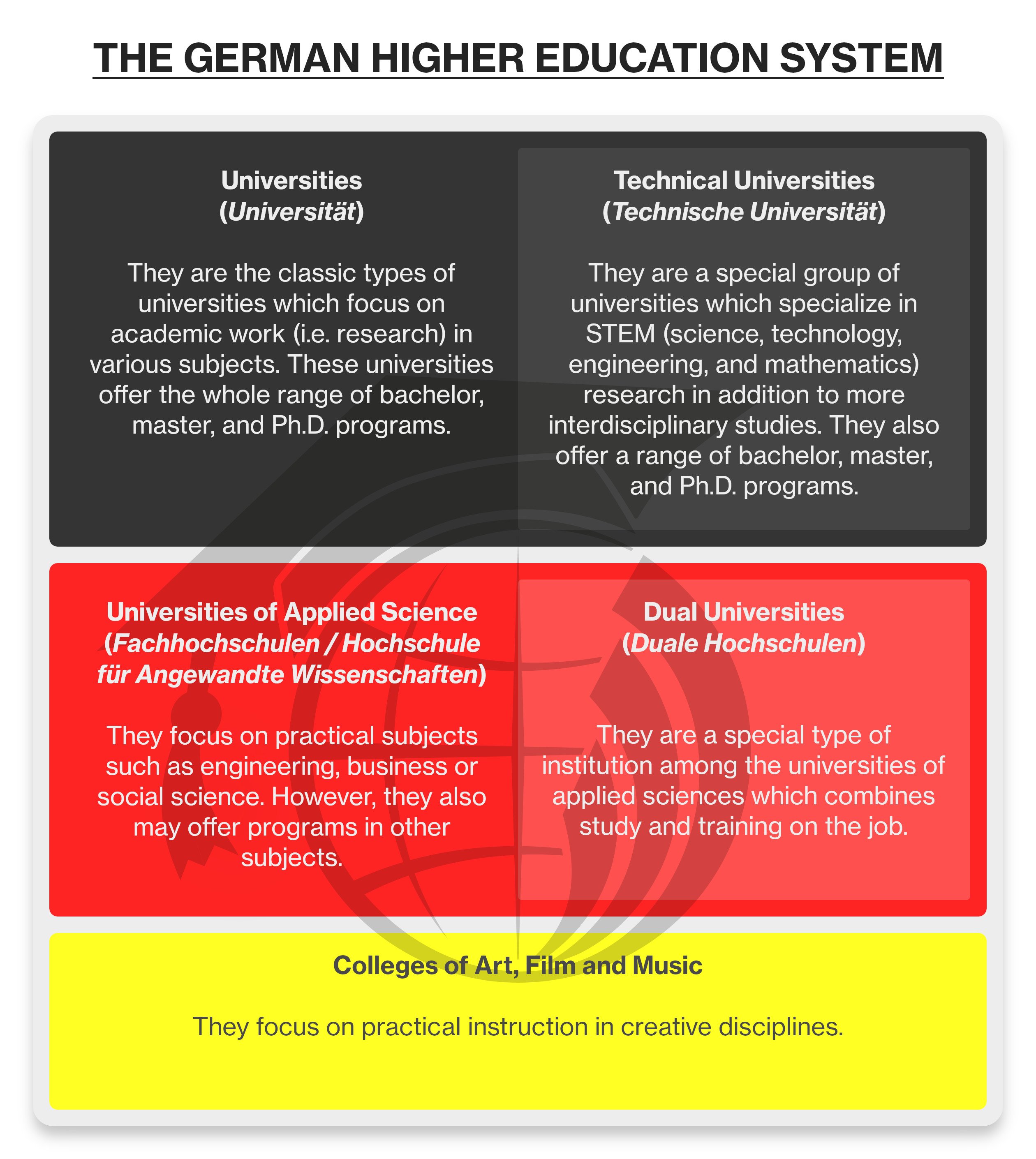
Our aim is to help you choose the best engineering programme for you. First, you need a general introduction to the German higher education system:
List of Engineering Universities in Germany

More than one million students are enrolled in STEM subjects in Germany. Most of them (more than 750,000) study engineering. A special feature compared to other countries is that students in Germany can choose between different types of higher education institutions offering engineering sciences. As shown in the previous section, these different institutions have different teaching styles. This gives students the freedom to learn and study in the way they want and to find the perfect programme for their interests. Take a look at the many institutions offering engineering courses below:
Technical Universities (Technische Universitäten)

© א (Aleph). Type of license: CC BY-SA 2.5.
There are 17 Technical Universities (TUs) in Germany:
- RWTH Aachen.
- Technical University of Berlin.
- Technical University of Braunschweig.
- Technical University of Chemnitz.
- Technical University of Clausthal.
- Brandenburg Technical University of Cottbus-Senftenberg.
- Technical University of Darmstadt.
- Technical University of Dortmund.
- Technical University of Dresden.
- Technical University of Bergakademie Freiberg.
- Hamburg University of Technology.
- Technical University of Hannover.
- Technical University of Ilmenau.
- Technical University of Kaiserslautern.
- Karlsruhe Institute of Technology.
- Technical University of München.
- Technical University of Stuttgart.


Other Universities (non TUs)
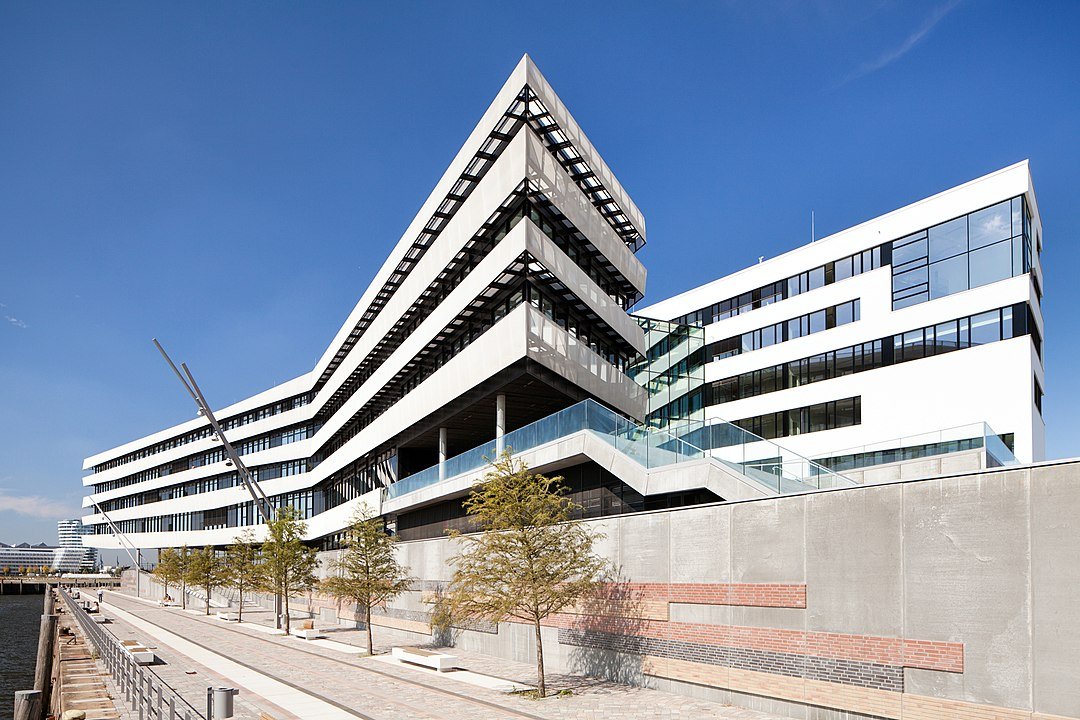
© Robert Gommlich. Type of license: CC BY-SA 4.0.
Besides the Technical Universities (TUs), many other universities also offer engineering sciences though they may not focus only on technical study programs. Check some of them out below:
- University of Augsburg.
- University of Bayreuth.
- University of Ruhr-Bochum.
- University of Bremen.
- University of Duisburg-Essen.
- University of Erlangen-Nürnberg.
- HafenCity University Hamburg (HCU).
- Helmut Schmidt University Hamburg.
- University of Kassel.
- University of Kiel.
- Otto von Guericke University Magdeburg.
- University of the Bundeswehr München.
- University of Paderborn.
- University of Rostock.
- University of Saarland.
- University of Siegen.
- University of Ulm.
- University of Wuppertal.

University of Applied Sciences (incl. the THs)
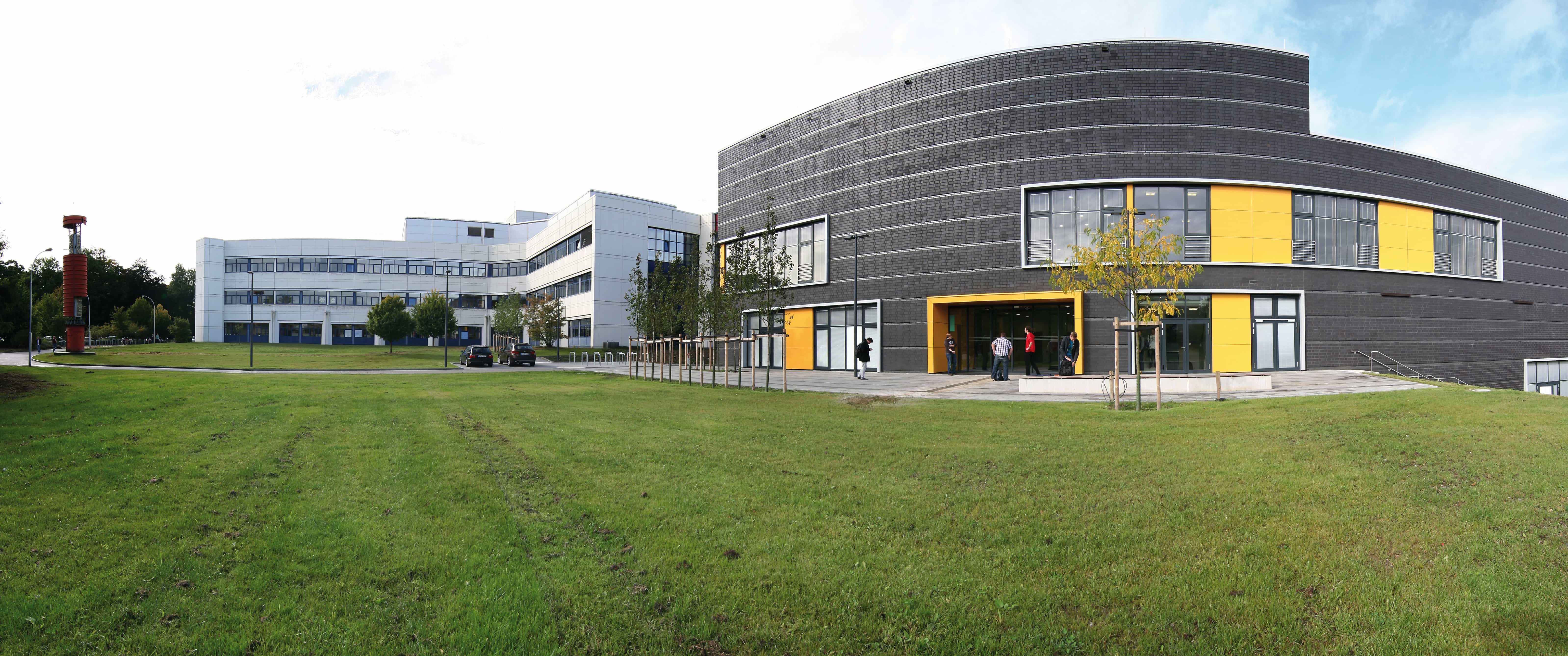
© Thilo Vogel. Type of license: CC BY-SA 3.0.
Over 100 Universities of Applied Sciences (UAS) in Germany offer engineering courses. You will find engineering faculties at almost every major Fachhochschule in Germany. We have listed some of them below:
- FH Aachen University of Applied Sciences.
- Hamburg University of Applied Sciences.
- Berlin International University of Applied Sciences.
- Beuth University of Applied Sciences Berlin.
- Dortmund University of Applied Sciences and Arts.
- Darmstadt University of Applied Sciences.
- Munich University of Applied Sciences.
- RheinMain University of Applied Sciences.
- Rhine-Waal University of Applied Sciences.
Additionally, there are a number of UAS that already have the technical focus in their name and call themselves “Technische Hochschule” (TH) which is Technical University of Applied Sciences in German:
- Bingen University of Applied Sciences (TH Bingen).
- Deggendorf Institute of Technology (TH Deggendorf).
- Cologne University of Applied Sciences (TH Köln).
- Ingolstadt Technical Academy (TH Ingolstadt).
- Lübeck Technical Academy (TH Lübeck).
- Mittelhessen University of Applied Sciences (TH Mittelhessen).
- Nürnberg Georg Simon Ohm Technical Academy (TH Nuremberg).
- Eastern Bavaria Regensburg Technical Academy (OTH Regensburg).
- Rosenheim Technical University of Applied Sciences (TH Rosenheim).

Dual Universities (work-study)
Another special feature are the so-called dual universities (Duale Hochschulen). Students who study here are employed by a company (usually as an apprentice or trainee) and are enrolled at the university at the same time. That’s why they are called “dual” - because they combine study and work. Some dual universities that offer engineering sciences (so far, exclusively in German) are:
- Baden-Württemberg Cooperative State University.
- Duale Hochschule Gera-Eisenach.
- Sachsen University of Cooperative Education.
In addition to these universities, dual studies are also possible at many universities of applied sciences which cooperate with industry partners.

Top-ranked Universities for Engineering
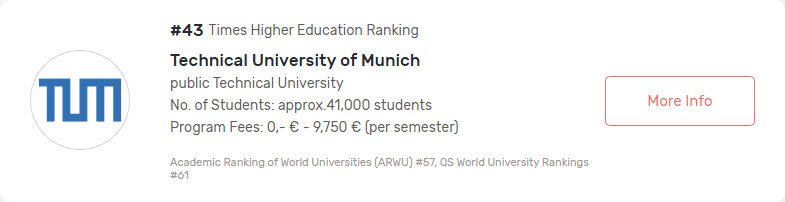
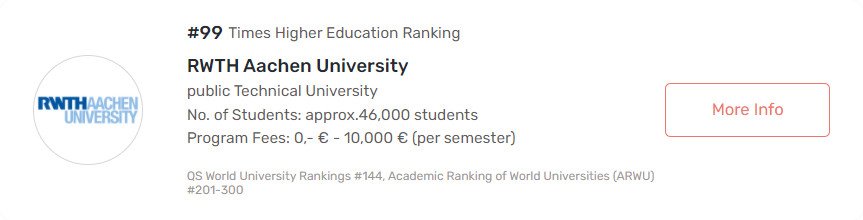
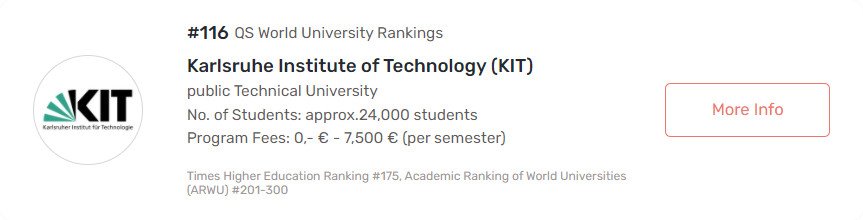
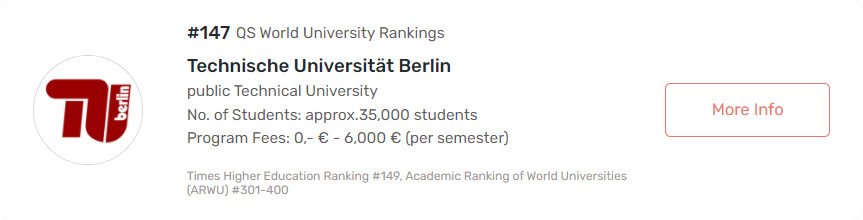
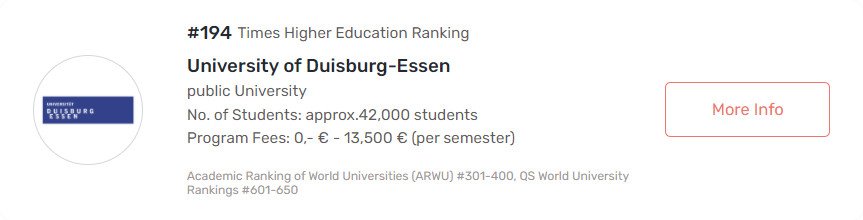
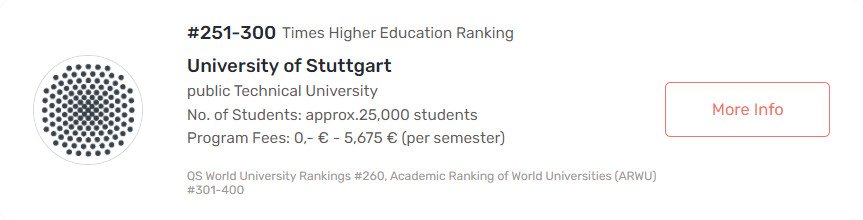
Just because international students can study at a public university for free doesn't mean they have to sacrifice quality. Public universities in Germany offer world-class programmes that are ranked among the best in the world. What sets Germany apart is that students don't have to invest hundreds of thousands of dollars to get that education. Take a look at some of the top-ranked engineering universities in Germany below:

Requirements for an Engineering Degree
Generally, there are three main requirements international students need to meet to be eligible for a degree program in Germany. We have taken the guesswork out of such research for you and outline application requirements in all of the engineering study programs on our StudyFinder. To see if you meet the most basic requirements to apply to an engineering university, check the requirements below:
1
A First Academic Degree in a relevant subject
Depending on the study program you are applying to, you will have different requirements for your previous education. For engineering, it is important that applicants have a relevant degree or relevant courses in respect to their preferred study program. For example, if you are applying for a biochemical engineer master’s program, a previous degree in biochemistry or another relevant top would be required.
- Bachelor’s Education Requirement: an entrance qualification certificate.
- Masters Degree Requirement: a bachelor’s degree or equivalent.
- Ph.D.: a master’s degree or equivalent.
2
3
A Visa or Residence Permit
About ⅔ of international students who come to study in German need a visa. Each country has its own visa requirements for a student visa.
The requirements listed above are the bare minimum needed to apply to an engineering degree programme. However, each programme sets its own individual application requirements, which may go beyond the absolute minimum requirements outlined in this section. Additional requirements may include, but are not limited to, the following:
- Extra-curricular activities.
- Internships.
- Volunteer work.
- Academic achievement.
- Motivation letter.

Cost of Attendance
Public universities in Germany generally do not charge tuition fees. This also applies to non-EU students. As public universities dominate the higher education landscape, all top ranked universities are public. In fact, the top ranked universities for engineering listed in this article are all public. However, note that the University of Stuttgart and the Karlsruhe Institute of Technology are exceptions to this rule as they are located in the German state of Baden-Württemberg.
The state of Baden-Württemberg in the south of Germany charges a small tuition fee to all non-EU students. However, over 60% of the engineering courses on our StudyFinder are tuition-free. Private universities in Germany, as elsewhere, charge tuition fees. In addition to private universities and Baden-Württemberg, there are a few other exceptions to the free tuition rule. All these costs are shown below:
German Higher Education Costs
| Tuition Fee | vs. | Semester Contribution |
| pays for study program | pays for administrative costs, social services provided by university, local public transportation ticket for unlimited use throughout semester | |
| averages 5,000 - 7,000 € per semester | averages 200 - 300 € per semester | |
| charged by private universities and specialized professional degrees (e.g. L.LM, MBA, etc.)* | Charged by all universities |
*In the southwest of Germany lies the state of Baden-Württemberg. Baden-Württemberg has a mandatory tuition fee of 1,500 € per semester to all non-EU students.
Keep in mind that while some programs are not tuition-free, you shouldn’t overlook them on your program search. Should you be interested in a program that charges tuition, keep your many funding options in mind. There are many scholarships available for international students. Also, be sure to refer to DAAD Scholarships for international students in Germany.
Application Process
Applying for a course can be time-consuming. The collection of official documents that need to be submitted is at the root of this lengthy process. Therefore, we recommend that you develop a timetable for your application, with personal deadlines set weeks in advance of the actual university and admissions office deadlines. We have simplified the steps as much as possible to give you a general overview of the application process for someone who may not know where to start:
1
Search for your study program
This process requires a significant amount of research as well as knowledge to know how to find a great comparison of different engineering programs. We have taken the liberty to do this entire step for you and collected all of this data (language requirements, admissions requirements, deadlines, program info, etc). Our StudyFinder is the largest database of English-language study programs, so make sure to use it to your disposal.
2
Collect required documents
Once you have narrowed down the selection to your top programs, you should observe all of the requirements to apply and submit all documents by the submission deadlines. Be sure to begin this process early as some documents, such as official notarized documents and certified translations, may take longer to acquire. If you are applying via uni-assist, be sure to use their online platform to guide you through the process.
3
Submit application
The final step is to submit all official documents to your desired universities. If you are applying via uni-assist, then you only need to submit such required documents once. If you are applying directly to universities as well as other programs which use uni-assist, be sure to submit requested data to all parties. This may include the submission of hard copies via mail as well as digital copies. Consult the admissions office at your preferred programs for further process inquiries.

Summary Box
Searching for the perfect engineering program can be stressful but we have taken the research and guesswork out of the process for you. With our StudyFinder, informational articles, and university rankings, you are sure to find your dream engineering program. Here are a few important things to remember:
- Engineering programs are offered by universities, universities of applied science, and technical universities. Make sure to look at all program offerings so you aren’t missing what could be your dream engineering degree.
- Students should meet three requirements to be eligible to apply to engineering programs: a previous degree or education qualification, a language certificate, and a visa. These three things are the bare minimum to be considered. Candidates should be prepared to have additional qualifications such as academic achievement, internships, and volunteer work, among other things.
- The top-ranked engineering universities in Germany are public. This means that they also follow the rule of public institutions in Germany in that they do not charge tuition fees. Keep in mind that there are exceptions for specialized as well as for the universities in Baden-Württemberg.
See all English programs in our StudyFinder
More than 500 programs in EngineeringGerman Engineering Universities in our StudyFinder
 Sort by:
University of Potsdam

Württembergische Verwaltungs- und Wirtschafts-Akademie

Friedrich Schiller University Jena

Saarland University

Eberswalde University for Sustainable Development

TU Darmstadt

Technische Universität Braunschweig

Rosenheim Technical University of Applied Sciences

University of Bayreuth

Deggendorf Institute of Technology
← Prev Page
1
2
3
...
27
Next Page →